
23 de April de 2026
How to incorporate the top office design trends for 2026
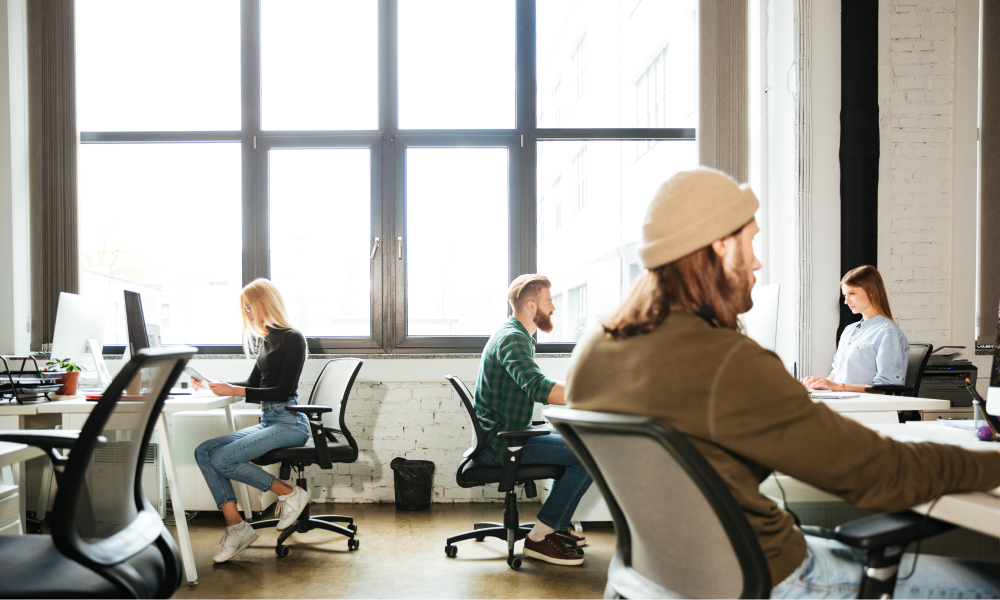
The trends redefining office design for 2026—such as the evolution of hybrid work, sustainability, neuroinclusion, and the incorporation of smart technology—are deeply interconnected. To successfully address them, organizations will need to create flexible, people-centered, and data-driven spaces capable of fostering purpose, connection, and community beyond mere aesthetics.
Key Takeaways
- Redesign offices to support hybrid work: use more compact floor plans to create collaborative zones, flexible seating, and social spaces that offer purposeful in-person experiences.
- Prioritize sustainability in workplace design: incorporate natural light, energy-efficient equipment, recycled materials, and certifications such as WELL, BREEAM, or LEED to improve environmental impact and well-being.
- Leverage smart technology to optimize space and comfort: implement tools such as desk reservation systems, occupancy sensors, and people-centric lighting to adapt layouts, improve productivity, and make the office more team-friendly.
Hybrid Workplaces: Turn Unpredictable Attendance into Purposeful Presence
Research from IFMA WE and Gensler’s U.S. Workplace Survey show the same thing: people go to the office to collaborate, connect, and access tools they don’t have at home. To make that time worthwhile, offices must evolve: moving from dense “desktop farms” to intentional experience centers.
Ways to implement a hybrid-ready design:
- Reallocate square footage to collaboration
Reduce underutilized desk areas and reinvest that space in focus rooms, project zones, and multipurpose lounges. Use occupancy sensors and space management software to see which areas deserve to be expanded.
- Create activity-based neighborhoods
Research by Kay Sargent highlights the importance of “choice and control.” Design zones for different work modes—quiet focus, casual meetings, structured meetings, and social spaces—so that each person can choose the space based on the task.
- Support weekly fluctuations with flexible furniture
Rotating teams need modular seating, mobile whiteboards, and tables on wheels. Gensler’s 2026 planning guide recommends “designing for rapid reconfiguration” rather than fixed layouts.
- Add hospitality-inspired social spaces
Include café-style tables, comfortable lounge areas, or library-style nooks. People are looking for an office experience they can’t replicate at home.
Sustainable Design: Create Spaces That Promote Well-being and Reduce Your Carbon Footprint
Sustainability is now standard practice. Work Design Magazine predicts that 2026 will be the year sustainability shifts “from aspirational to operational,” driven by WELL, LEED, BREEAM, and growing expectations from teams who want healthy and responsible workplaces.
How to implement sustainable design:
- Prioritize natural light and circadian health
Arrange the layout so that high-traffic areas are near windows. Use reflective surfaces and transparent partitions to bring light into deeper areas. WELL’s Light concept offers science-based guidelines.
- Choose materials with purpose
Incorporate salvaged, refurbished, or reused furniture; low-VOC paints and finishes; flooring and carpets with recycled content; and certified sustainable textiles (e.g., Cradle to Cradle).
- Reduce operational carbon
Switch to LED lighting, energy-efficient appliances, smart thermostats, and low-flow fixtures. These upgrades reduce emissions and also lower long-term costs in corporate real estate.
- Integrate sustainable habits into the daily environment
Design spaces where sustainability is the default option: paperless meeting rooms, central waste stations, filtered water stations, and reusable tableware.
- Use certifications as a roadmap, not just as “badges”
WELL, LEED, and BREEAM provide technical frameworks for air quality, comfort, water purity, acoustics, and more. Following these guidelines helps create healthier offices where people feel energized.
Neuro-inclusive design: create environments where every mind can perform at its best
HOK (Kay Sargent) and IFMA WE emphasize the need for design that addresses neurodiversity, sensory sensitivity, and cognitive ergonomics. By 2026, neuro-inclusive design will become a basic requirement, not a niche feature.
How to implement it:
- Create sensory zones
Offer high-stimulation areas (collaboration, socializing) and low-stimulation areas (quiet rooms, acoustic booths). Use sound masking and varied lighting to balance stimuli.
- Offer adjustable environments
Implement dimmable lights, movable panels, height-adjustable desks, and a variety of seating options. Everyone processes stimuli differently; the ability to adjust helps maintain comfort.
- Optimize acoustics throughout the space
Strategically use acoustic felt, panels, carpets, and soft furnishings. Reducing reverberation lowers cognitive load.
- Facilitate predictable navigation
Use color zoning, simple signage, and intuitive pathways. Predictability reduces stress and improves accessibility.
Smart offices: use real-time data to optimize comfort and efficiency
By 2026, workplace design will become a data-driven discipline. Occupancy sensors, booking systems, and people-centric lighting provide insights to continuously adjust the space.
How to implement smart technology:
- Deploy occupancy and usage sensors
Use data to identify peak traffic times – underutilized rooms – overbooked zones – blocked or unavailable seats. This helps adjust layouts, relocate amenities, and reduce wasted space.
- Implement desk and room booking tools
Booking tools guide people to the right space, reduce friction, and provide real-time visibility into demand.
- Install human-centric lighting (HCL)
HCL systems, such as the one installed by Gymshark, mimic circadian rhythms, improve focus, and adapt to natural light. Use it in meeting rooms, windowless interior spaces, and wellness areas.
- Integrate environmental sensors
Measure temperature, humidity, air quality, and CO₂ to create an environment that promotes well-being and productivity.
Well-being and amenities: invest in spaces that reduce burnout and support work-life balance
The “workplace that makes you feel good” continues to grow. Gensler and HOK note that amenities aren’t just perks: they’re part of the strategy to combat burnout and encourage a return to the office.
How to implement amenities that matter:
- Add amenities focused on well-being
Consider meditation rooms, quiet rooms, mini-gyms, stretching areas, or rest pods.
- Offer bookable spaces that are actually used
Nursing rooms, private call booths, quick-meeting rooms, and gyms reduce stress and improve workflow.
- Use the floor plan to encourage healthy microbreaks
Include wide hallways, greenery, hydration stations, casual seating, and terraces
- Create social “anchors”
Add cafes, game rooms, and multipurpose lounges that encourage informal collaboration.
Flexible furniture: prepare the office for constant change
Offices in 2026 change week by week as hybrid work models evolve, teams grow, and projects shift. Furniture must adapt.
How to implement it:
- Choose mobility over permanence
Equip areas with furniture on casters, modular seating, and reconfigurable meeting setups.
- Prioritize ergonomics
Offer sit-stand desks, chairs with lumbar support, monitor arms, and accessories that enhance physical comfort.
- Use multi-functional pieces
Benching systems that convert into meeting tables, movable partitions that also function as whiteboards, or ottomans with storage for technology.
- Adopt microenvironments
Phone booths, individual focus pods, and acoustic chairs offer refuge from the noise of open spaces.
The flexible office defines 2026
The workplace is becoming a fluid, people-centered environment shaped by behavior, data, and well-being. By designing for hybrid work, prioritizing sustainability, embracing neuroinclusion, and applying smart technology, companies can create offices that offer people something their homes cannot: purpose, connection, and community.
By Amanda Meade, a content creator at Eptura specializing in workplace experience, meeting productivity, and emerging trends in workspace planning and visitor management. Original version.
Turn office trends into a management system with ABTIO
The 2026 trends are an opportunity only if they become a consistent operation. Because a hybrid, sustainable, neuro-inclusive, and smart office isn’t sustained by architecture alone: it’s sustained by data, clear rules, adoption, and continuous improvement.
At ABTIO, we support organizations with Workplace Management to move from intention to results.
What we solve (in practice)
- Purposeful hybrid: usage policies + reservations + activity-based zoning to reduce friction and improve the experience.
- Actual space usage: analyzing occupancy/demand to adjust layouts, services, and footprint decisions.
- Technology that gets adopted: implementation and optimization of workplace tools (with a focus on actual behavior, not just configuration).
- Operational well-being and neuroinclusion: applicable standards (acoustics, lighting, signage, low-stimulation spaces) and monitoring.
- Applied sustainability: routines and metrics to reduce waste (energy/services) without sacrificing comfort.
A simple start (no-obligation):
- Executive review (30–45 min) of the current situation.
- Diagnosis of pain points and quick wins (hybrid work, reservations, occupancy, services).
- 60/90-day plan with actions, responsible parties, and KPIs.